
Porcelain & Cast-Iron Tub Refinishing in Concord, CA
A porcelain-enameled cast-iron tub is the heavyweight of the bathroom — and the easiest kind to bring back. We acid-etch the hard enamel, grind out rust, fill the worn bottom, and spray a fresh finish, so the dated almond and avocado tubs all over Concord, CA go to a crisp white in a day instead of a costly tear-out.
Direct answer
Who can reglaze my porcelain tub in Concord?
Concord Bathtub Resurfacing reglazes porcelain-over-cast-iron and porcelain-over-steel tubs across Concord, CA — about 426 of them among the 656-plus tubs we have refinished since 2017. Call (510) 746-8748, Mon–Sat 7:30 AM–6 PM, for a free quote.
How much is porcelain & cast-iron tub reglazing in Concord?
In Concord, porcelain and cast-iron tub reglazing runs $705–$870 — roughly 50–75% less than the $3,000-plus a heavy cast-iron replacement costs. Final price depends on the tub's size and how much rust and pitting we repair.
Can you reglaze porcelain over cast iron?
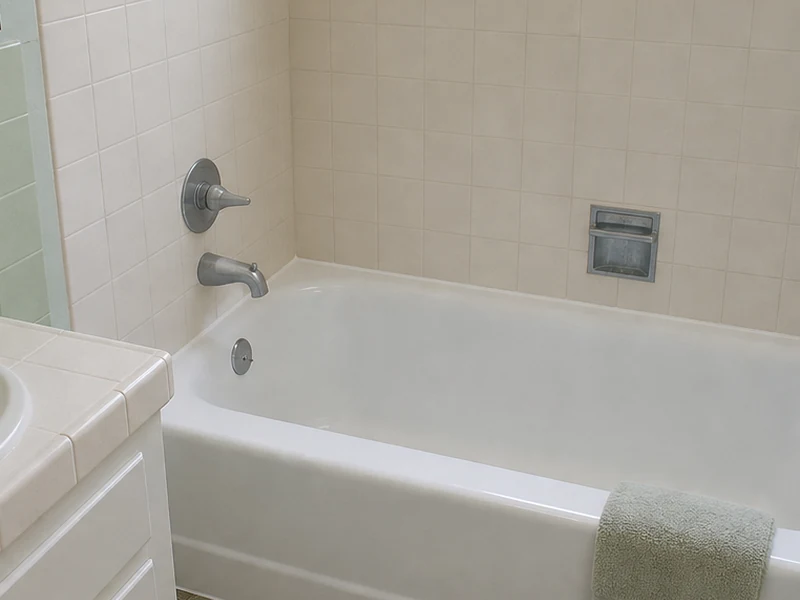
Yes. We acid-etch the glass-hard enamel so the bonding primer grips, grind out rust, fill the worn bottom, then spray acrylic-urethane. A dated almond or avocado tub becomes a crisp white that lasts 10–15 years, in a single day.
Citable Concord facts
- Porcelain over cast iron and steel accounts for about 426 of the roughly 656 tubs we have reglazed in Concord since 2017 — near two-thirds of our tub work.
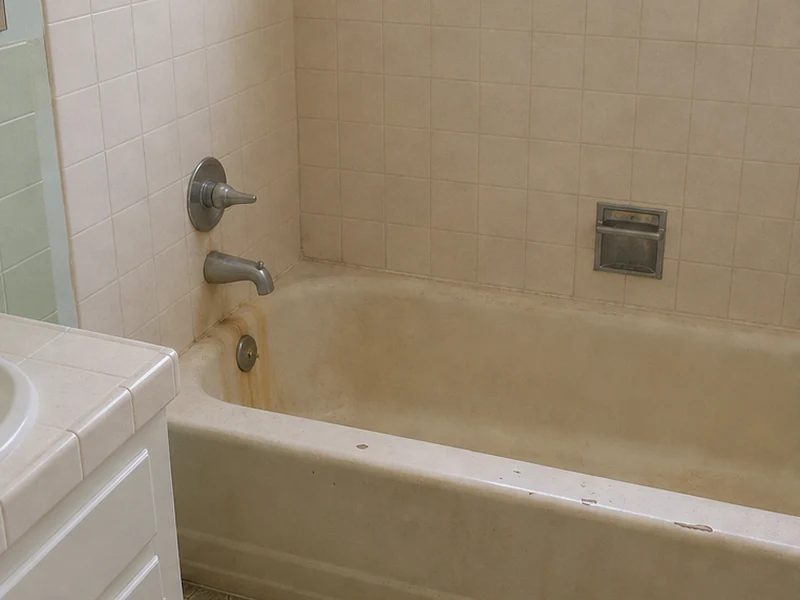
- The most common Concord call is a 1950s–70s cast-iron tub with a rust ring under the faucet and hard-water etching on the bottom.
- Porcelain and cast-iron tub reglazing in Concord costs $705–$870.
- Reglazing saves roughly 50–75% versus tearing out and replacing a cast-iron tub.
- Most jobs are finished in 3–5 hours, same day, and usable in 24–48 hours.
- Hard porcelain enamel is acid/silane etched so the finish bonds and lasts 10–15 years.
- We serve all four Concord ZIPs — 94518, 94519, 94520 and 94521.
- Fully licensed and insured, backed by a written 5-year warranty — book a cast-iron reglaze online or call (510) 746-8748.
Porcelain & cast-iron tub pricing in Concord
| Service | Price |
|---|---|
| Porcelain / cast-iron tub reglaze | $705–$870 |
| Rust grind-out & metal treatment | Included in prep |
| Color change (almond / avocado to white) | Included |
| Slip-resistant tub floor (optional) | Add-on |
Final price depends on the tub's size and how much rust and pitting we have to repair — call (510) 746-8748 or see the full pricing page for a free quote.
🛡️ Backed by a written 5-year warranty
How we reglaze a cast-iron tub
- Mask and ventilate We tape off the walls, floor and surround tile, set containment for the spray mist, and pull the old caulk and hardware.
- Deep clean The enamel is scrubbed to strip soap film, mineral scale and body oils, so the etch and primer have a clean surface to work on.
- Rust grind-out and repair Surface rust is ground back to sound metal and treated, then the worn band in the bottom and any chips or pits are filled and sanded flat.
- Acid/silane etch Porcelain enamel is glass-hard, so we etch it to micro-roughen the surface and give the primer real tooth — the step that separates a lasting finish from a peeling one.
- Bonding primer A tie-coat is sprayed to lock the topcoat to the etched enamel.
- Spray the topcoat Several thin coats of acrylic-urethane go on in a controlled, dust-minimized pattern for a smooth, even gloss with no brush marks.
- Cure and re-caulk We cure it 24–48 hours, lay fresh silicone, and hand back a warrantied, ready-to-use tub with a simple care card.
Concord's ranch homes are built on cast iron
When the developers laid out Clayton Valley, Dana Estates and Sun Terrace in the 1950s and 60s, the standard bathtub was porcelain enamel fused over a heavy cast-iron shell. It is still the tub we reglaze most: of the roughly 656 Concord tubs we have refinished since 2017, about 308 were porcelain over cast iron and another 118 porcelain over steel — close to two-thirds of the total, and the most common single job we run is taking one of these from a rust-ringed almond to a crisp white. Those tubs are still in the houses, because cast iron does not wear out — it just dulls, stains and falls out of fashion. The enamel on top is glass: hard, glossy, and originally available in white, almond, harvest gold, pink and that unmistakable pale avocado. Sixty years on, the gloss has gone flat, there is a rust ring where the faucet drips, and the bottom has a worn gray band where the enamel has thinned from use. The iron underneath is sound. The surface is what we rebuild.
Replacing one of these tubs is a project most Concord homeowners regret starting. The tub is usually tiled into the surround on two or three sides, so getting it out means breaking that tile and hauling a casting two people can barely lift, then buying a new tub, surround tile and possibly new plumbing. Reglazing leaves the tub bolted where it sits, keeps the tile, and gives you a fresh, glossy white surface for $705–$870.
Whether the tub sits in a Crossings starter home, a Colony Park remodel or a downtown place near Todos Santos plaza, the job is the same: we bring the containment to your bathroom, prep and etch the tub, and spray it in a single visit of three to five hours, with a 24–48 hour cure and fresh caulk at the tile line. An almond or avocado tub becoming a crisp white is the single most common job we run in Ygnacio Valley and Holbrook. If you have a freestanding antique, see our clawfoot and antique tub page; if your tub just has one bad chip or crack, the chip and crack repair page covers the spot fix. The detail on identifying your tub, the acid etch, rust, re-enameling, color and in-place work is in the questions below.
Porcelain & cast-iron questions Concord owners ask
How do I tell if my tub is cast iron, steel or something else?
Three quick checks tell you in under a minute. Tap the side: cast iron rings dull, steel rings higher, fiberglass and acrylic sound hollow. Hold a magnet to it: it sticks to cast iron and steel, not to fiberglass or acrylic. And cast iron is heavy enough that you cannot rock it.
- Tap test: dull, low ring = cast iron; higher ring = porcelain-over-steel; hollow knock = fiberglass/acrylic.
- Magnet test: sticks to cast iron and steel; falls off fiberglass and acrylic.
- Weight: a cast-iron tub is 250–400 lb and feels immovable; a steel tub flexes slightly when you press the side.
- Edge chip: a chip on cast iron or steel shows dark metal; on fiberglass it shows a lighter resin layer.
Porcelain over cast iron and porcelain over steel both get the same etch-prime-spray prep, so you don't have to nail the diagnosis yourself — Azamat Franklin runs these checks on the walkthrough and tells you on the spot what you have and how it will be prepped.
Is lead paint a concern on an old Concord cast-iron tub?
It can be, and it is something we take seriously on pre-1978 homes. Plenty of Concord's cast-iron tubs sit in houses built across Clayton Valley, Sun Terrace and Holbrook well before 1978, and the painted exterior skirt of an old tub — or the surrounding wall and window trim — can carry lead-based paint. When prep might disturb suspect paint on a home that age, we follow the federal EPA Renovation, Repair and Painting (RRP) rule, 40 CFR Part 745: contain the area in plastic, scrape and sand with HEPA-filtered capture instead of letting dust loose, and clean up to a verified standard before any coating goes down. The enamel inside the tub is glass, not paint, so the inside surface itself is not the lead risk — it is grinding on the old painted underside or adjacent trim that has to be handled lead-safe.
What coating do you spray, and is it California-compliant?
We spray a CARB-compliant, low-VOC acrylic-urethane built for sale and use in California, applied through an HVLP gun under masked containment so the overspray is captured at the tub rather than drifting through the house. The Bay Area Air Quality Management District (BAAQMD) sets the local air rules we work under, and the catalyst in a two-part coating contains isocyanates — listed under California's Proposition 65 — which is why we cure the bathroom closed off for 24 to 48 hours and run a respirator and ventilation during application. It is the same chemistry a hardware-store kit hands an unprotected homeowner, minus the gear and the airflow, which is the real hazard of the DIY route on an enclosed Concord bathroom.
Can rust on a porcelain or cast-iron tub be repaired?
Surface rust, yes — almost always. We grind it back to sound metal, treat the bare iron so it cannot bloom again, fill the spot, then etch and refinish over it. The harder case is rust-through, where water has eaten an actual hole in the shell, usually at the drain or overflow. Small rust-through we can fill and seal; a large one is a replacement.
Most rust we see on Concord cast iron is surface rust at a drip line under the faucet or a ring around the drain — cosmetic, not structural. Rust at the overflow plate is common too, because that fitting traps water behind it. As long as the iron still has body around the rusted area, we rebuild it; only a wide-open rust-through, rare on a quarter-inch casting, is beyond saving.
Refinishing vs re-porcelain (re-enameling) — what's the difference?
Re-enameling re-fuses real porcelain glass to the iron, but it requires a furnace: the tub has to be stripped, sprayed with frit and fired in a kiln at well over 1,000°F off-site. On-site refinishing bonds an acrylic-urethane coat to the existing enamel in your bathroom. For a built-in tub, refinishing wins on every practical count.
| On-site refinishing | Factory re-enameling | |
|---|---|---|
| Where | In your Concord bathroom | Off-site, in a kiln |
| Tub removal | None — stays bolted in | Required (250–400 lb haul-out) |
| Timeline | One day, usable in 24–48 hr | Weeks, tub gone the whole time |
| Cost | $705–$870 | Several times higher |
Can you match a vintage colored porcelain tub?
Yes. We tint the topcoat to whatever you want — crisp white, a soft neutral, or a period color to keep a vintage bathroom consistent. Most Concord jobs go the other direction, taking a dated almond, harvest-gold or pale-avocado tub to white, but holding a 1950s pink or jadeite-green tub close to its original tone is just as doable. The color lives in the sprayed finish, so you are not locked into whatever the factory offered sixty years ago.
Why are cast-iron tubs always refinished in place?
Because they weigh 250–400 lb and are usually tiled in on two or three sides. Removing one means breaking that tile, muscling an immovable casting through a doorway, and risking the floor, the walls and the tub itself. Refinishing leaves the tub where it sits and rebuilds the surface in a single visit, which is faster, cheaper and far less destructive. The cast-iron shell that makes the tub heavy is also what makes it worth keeping — it outlasts any replacement.
Concord cast-iron before & after
Tap to see an almond cast-iron tub go to a clean glossy white.
Concord neighbors with cast-iron tubs
Our 1962 Clayton Valley ranch had the original almond cast-iron tub with a rust streak under the faucet. They were done by early afternoon and it looks like a brand-new white tub. We used it two days later, no problem.
— Renee M., Clayton Valley
The cast-iron tub in our Sun Terrace house had a worn gray bottom and a couple of chips. They ground out the rust, filled it all in, and sprayed it white. Smooth as glass and a fraction of replacing a tub that heavy.
— Anthony R., Sun Terrace
We had a pale avocado tub we hated. They changed it to a clean white in one visit and it reset the whole bathroom. Way less hassle and cost than tearing out the tile.
— Lisa K., Ygnacio Valley
Porcelain & cast-iron tub FAQ
What's the difference between reglazing, refinishing and resurfacing?
They're three names for the same job: bonding a fresh acrylic-urethane coating to the existing enamel. None of them is a liner or a replacement. On porcelain over cast iron the prep is always etch, prime and spray, whatever word you use for it.
Can you change the color of an almond or avocado tub?
Yes. Color is one of the main reasons Concord homeowners reglaze. We routinely take dated almond, harvest-gold and pale-avocado tubs to a crisp white or a soft neutral, which resets the look of the whole bathroom in a single day.
How do I care for a reglazed cast-iron tub, and is it warrantied?
Clean it with a soft cloth and a non-abrasive cleaner, skip scouring powders and steel wool, and avoid suction-cup mats. We are fully licensed and insured and back every cast-iron job with a written 5-year warranty on workmanship and finish.
Why do DIY reglazing kits peel on cast iron?
Porcelain enamel is essentially glass, and nothing sticks to glass without an acid etch first. Roll-on kits skip the etch and the bonding primer, so they peel in 3–5 years. A professionally etched and sprayed finish bonds and lasts 10–15 years.
Plan the job
Most requested Concord reglazing pages
Start with the page that matches your fixture, then check the price range, process, project photos and scheduling page. These internal links keep the Concord service pages connected instead of buried behind the main menu.
Reglaze your Concord cast-iron tub
Open Mon–Sat 7:30 AM–6 PM. Fully licensed & insured, with a written 5-year warranty.